Translate

Share

HN. Diberdayakan oleh Blogger.
 
Tampilkan postingan dengan label genosida. Tampilkan semua postingan
Rabu, 23 Oktober 2013

Laporan AHRC: Genosida Yang Terabaikan di Papua Barat

0 komentar
Decades of conflict in Papua, Indonesia, continue to cost the lives of civilians, soldiers and resistance group members. Ongoing human rights violations range from extrajudicial killings and intimidation of journalists to discrimination in health care, education and access to conomic opportunities. 
These are just the tip of the iceberg where violations of indigenous Papuans are concerned and these violations shape current Papuan perspectives on Indonesia. In this context, a solution for both indigenous Papuans and Indonesian national interests has so far remained out of reach.

Responding to the uprisings which surrounded the 1977 general elections in Papua, several military operations were launched in the Papuan highlands around Wamena. The response caused a further breakdown in the Papuan–Indonesian relations which had fallen apart at that time. The operations resulted in mass killings of, as well as violence against civilians. The stories of survivors recall unspeakable atrocities including rape, torture and mass executions. 
Estimations of the number of persons killed range from 5,000 up to tens of thousands. The research done for this report is consistent with these numbers, although restricted access to the area and ongoing intimidation of witnesses makes it difficult to confirm an upper limit of the number of victims.

Papua is now populated by both Papuans and increasing numbers of transmigrants from other parts of Indonesia. The initiative of the Papua Peace Network (Jaringan Damai Papua, JDP) to bring all stakeholders in Papua and those from Jakarta together for a peaceful dialogue in order to discuss a peaceful future for all residents of Papua remains an important initiative to reconcile the ongoing conflict. 
Without the freedom to articulate memories of past violations locally and opportunities for victims to heal their trauma, resentment against the Indonesians and their authority remains and this will continue to fuel the conflict. Reviewing and recognising the history of violence and its overarching effect on the relationship between Papuans and Indonesian authorities is thus a necessary step forward.

With the view to move forward in the conflict and to address the grievances of countless Papuans who suffered violence or lost family members, it is important to understand the history of mass violence experienced by the Papuans as well as the severity and background of their resentment against the government of Indonesia. 
Such an understanding will support solutions to the ongoing Papuan–Indonesian conflict. This report –which only covers one of the main violent events in the history of Papuan-Indonesian relations– tries to contribute to this process, seeking to acknowledge the suffering of thousands of victims and building towards a sorely needed common understanding of history.

 
Download the report:

Read more...
Kamis, 06 Juni 2013

BC Man Bikes 12,000 km to Spotlight ‘World’s Most Forgotten Conflict’

0 komentar
Plight of West Papuans focus of ‘Pedalling for Papua’ 

Jeremy Bally rides into Middle Cove, Newfoundland,
When most people hear of genocide in far-flung regions of the world they quietly grieve for the victims, but feel powerless to do anything about it. 

When B.C.-born Jeremy Bally learned of genocide in remote West Papua, his reaction was the opposite: I can, and must, do something to stop it. 

From this thought “Pedalling for Papua” was born, a gruelling five-country bicycle tour to spotlight the plight of West Papuans, whose human rights have been trampled through 50 years of occupation by the Indonesian military.
 "It’s necessary for me as an individual to take this on, because somebody has to, By Jeremy Bally"

“It’s necessary for me as an individual to take this on, because somebody has to,” says Bally, taking a break from his 12,000 km journey that started in Victoria, B.C., on May 29 and will end in Brisbane, Australia, on December 1.

“I take a personal stance as a global citizen. We need international advocates to dedicate themselves to this [issue] as much as we need national advocates to dedicate themselves to Canadian issues.”

West Papua is a province covering the western half of New Guinea, the world’s second largest island, which lies a few hundred kilometres north of Australia. Indonesia invaded the region in 1962, and in 1969 ordered West Papuans—largely at gunpoint—to vote for integration. 

The answer to why the Indonesian government was so intent on securing control of the area may lie in the vast amount of natural resources West Papua has to offer, including some of the world’s largest copper and gold mines. 

An estimated 100,000 – 500,000 West Papuans have been killed since the occupation, though numbers are difficult to confirm due to tight government control and a suffocating media ban. Their crimes? Peacefully advocating for independence through “subversive” activities like raising the West Papuan flag or calling for improved human rights and freedoms.

”Slow-motion genocide,” “world’s most forgotten conflict” and “mass murder” are some of the terms experts have used to describe the situation. Leaked videos posted on YouTube of torture, killing, and abuse of West Papuans by state soldiers show the chilling reality of these terms.

Sense of Urgency

Bally, 25, says travelling to West Papua helped him put a human face on the issue, and reminds him of the urgency of his work—something that spurs him on during the harrowing days he rides up to 200 km.

“I personally struggle with attaching myself to this issue all the time,” he admits. 
“But just connecting with the West Papuans that I already know personally, and asking them ‘What’s going on? Have you heard from your family? Is everyone good?’ Trying to bring it down to that personal social level helps me keep the sense of urgency up.”

Since his first bike campaign last year, Bally has attracted Lush Cosmetics as a major sponsor. Lush will fund his six-month journey across Canada, the Northeastern United States, U.K., Netherlands, New Zealand, and Australia. His bike, weighted by supplies in tow, is flanked by both the Canadian and West Papuan flags.

Between marathon riding sessions Bally will stop anywhere that will have him—churches, festivals, coffee shops, living rooms—and set up his presentation equipment to tell the story of the West Papuan people with the aid of his projector, computer, and ukulele. His background in childcare helped him recognize the power of a good story and its universal appeal to all ages and backgrounds. 
The presentation features his interviews with West Papuan refugees, activists, and exiles projected through original animation. Bally narrates the story, blending in original spoken-word poetry and his trademark ukulele hip-hop music.

“I feel that’s the only way I can really explain to people how I have come to dedicate myself to this, and maybe give them the opportunity to think about how they can find an entry way into something that is far away,” he says. 

“All I need is a space and an audience. I’m not really picky about what that looks like.”


Read more...
Sabtu, 01 Juni 2013

Orang hitam Masih Diperlakukan Seperti Budak di Papua, Indonesia

0 komentar


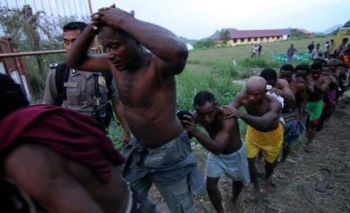
Foto ini adalah 100% nyata dan asli, bukti kuat apartheid abad ke-21 Indonesia di Papua Barat. Anda dapat melihat laporan Al Jazeera tentang bagaimana kemerdekaan ini damai kongres keras rusak.
Banyak dari mereka terlihat di sini juga brutal disiksa oleh militer Indonesia terlebih dahulu dan setidaknya 7 warga sipil Papua dikonfirmasi tewas sebagai akibat dari tindakan keras oleh pasukan keamanan. Kepala polisi Indonesia Imam Setiawan mengatakan itu adalah tugasnya untuk "menghancurkan siapa saja yang akan berbicara tentang Papua Barat bebas".

See Videi disini: http://youtu.be/KupXhPh6cu4 
Papua Barat adalah bangsa yang telah secara ilegal diduduki oleh Indonesia sejak 1963.
Lebih dari 500.000 penduduk asli Papua telah dibunuh oleh militer Indonesia sejak negara mereka diambil dari mereka dan mereka sering menghadapi rasisme, penyiksaan dan pelanggaran hak asasi manusia yang tak terkatakan dari pasukan Indonesia.
 
Ini genosida.
 
Papua bahkan dilarang mengibarkan bendera nasional mereka, menyanyikan lagu-lagu tradisional Papua atau dari mengenakan pakaian tradisional.

This Video : http://www.youtube.com/watch?v=vWaLNafIHw4&feature=player_embedded 
Ada Papua melayani 15 tahun hukuman penjara hanya karena mengibarkan bendera nasional Papua Barat.

Bagaimana Anda dapat membantu?
 
Harap mendukung kerja Panduan West Papua Campaign. Kami adalah organisasi sukarela dan setiap sumbangan yang kami terima digunakan untuk membantu membebaskan rakyat Papua Barat.

http://freewestpapua.org/ mengambil tindakan /
http://freewestpapua.org/ tindakan / donasi /

Silakan, kunjungi www.freewestpapua.org  atau www.facebook.com / freewestpapua
https://twitter.com/ FreeWestPapua
dan http://knpbnews.com/

Jangan biarkan suara Papua Barat tidak lagi terdengar.
 
Read more...

Labels

 
HOLANDIA NEWS © 2011 DheTemplate.com & Main Blogger. Supported by Makeityourring Diamond Engagement Rings

You can add link or short description here